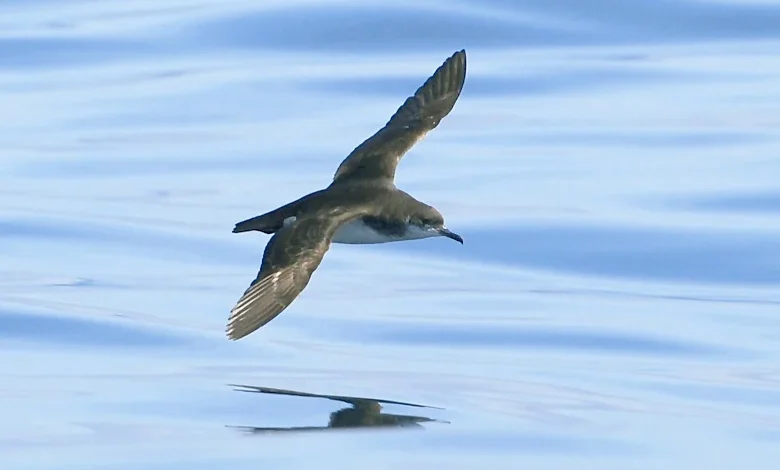
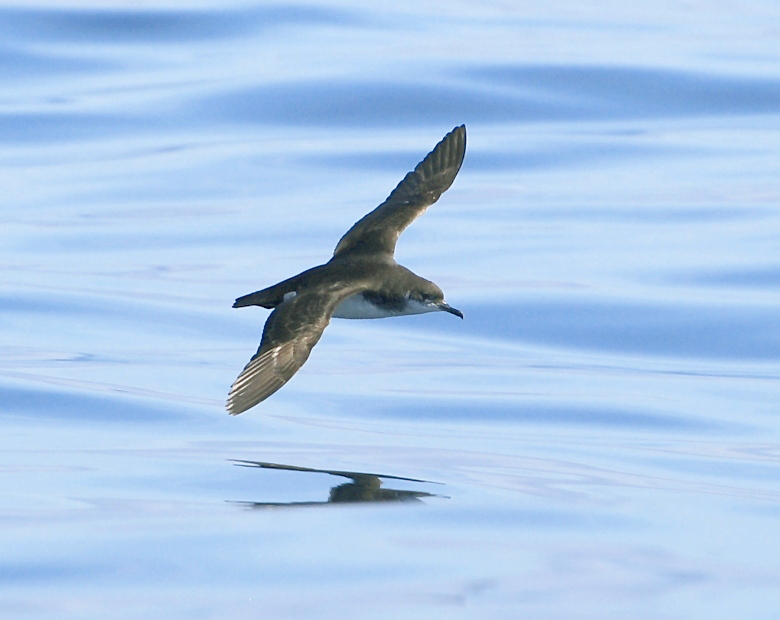
Jet lag has long been considered a uniquely human ailment, a modern byproduct of rapid transcontinental air travel that forces our internal circadian rhythms to struggle against the abrupt shifting of time zones. However, new research published in the journal Science suggests that this biological misalignment is a common, perhaps even universal, phenomenon among migratory creatures. For the Manx shearwater, a medium-sized seabird that traverses the vast expanse of the North Atlantic, the journey to and from feeding grounds is not merely a physical challenge; it is a complex navigational puzzle that leaves the birds suffering from a physiological version of jet lag, ultimately skewing their internal compass.
The study, led by Patrick Lewin, a behavioral and sensory ecologist at the University of Oxford, highlights how these birds rely on a solar-based navigation system that is tethered to an internal clock—a clock that inevitably falls out of sync as the birds move across lines of longitude.
The Mechanism of the Sun Compass
Manx shearwaters, which share evolutionary ties with the albatross, are remarkable navigators. They nest in burrows on coastal islands, primarily in the United Kingdom and Ireland, with a significant population density in Wales. To sustain themselves and their offspring, these birds embark on foraging excursions that can take them anywhere from a few dozen to over 1,000 kilometers into the open ocean.
To return to their burrows, the birds utilize a sophisticated dual-system approach. Researchers believe they possess a "map sense"—likely derived from olfactory cues—that allows them to determine their general location. Once that location is established, they employ the Sun as a celestial compass to maintain a precise heading.
However, the Sun’s position in the sky is not static; it is a function of both time and geography. To navigate accurately, a bird must know exactly what time it is relative to its current longitude. Because the Earth rotates, a bird traveling east or west experiences a shift in local time. If the bird’s internal clock does not adjust instantly to these changes, its perception of the Sun’s position becomes distorted.
"You can imagine an animal or a human that wants to travel south all day," Lewin explained. "At sunrise, when the Sun is in the east, it needs to be traveling 90 degrees clockwise of the Sun, but by midday it needs to be traveling straight towards the Sun, and by sunset it needs to be traveling 90 degrees anticlockwise of the Sun."
The study reveals that the shearwater’s internal clock is not perfectly synchronized with local time as it traverses different longitudes. While the birds attempt to recalibrate at dawn and dusk, the lag remains. For every degree of longitude covered between sunrise and sunset, the bird’s internal clock drifts approximately four minutes out of sync with local time. This causes the bird to miscalculate the Sun’s position, leading to a measurable deviation in flight path: clockwise when flying east and anticlockwise when flying west.
Two Decades of Tracking Data
The findings are the result of an exhaustive longitudinal analysis spanning 20 years. The research effort, spearheaded by Tim Guilford and Chris Perrins at the University of Oxford, began in 2004 as GPS technology became miniaturized enough to be carried by birds the size of a pigeon.
By compiling a massive database of 3,688 individual foraging trips made by 1,045 birds, the team was able to distinguish between the "wiggly," search-oriented flights of birds hunting for food and the direct, high-speed "homing" flights of birds returning to their colonies. By analyzing these homing trajectories, researchers calculated the expected sun-compass bias for each bird based on how far it had traveled east or west from the point where it last synchronized its clock at sunrise.
The resulting data provided a clear correlation: the birds’ actual flight paths deviated from the direct route in a manner that mirrored the predicted mathematical errors caused by a desynchronized internal clock. In total, 335 homing flights conducted out of the sight of land showed that the birds veered off course exactly as the Sun compass model predicted.
Navigational Implications and Error Correction
While the existence of "avian jet lag" is now documented, the research suggests that these birds have developed effective strategies to mitigate its impact. The navigational errors observed were relatively minor, usually resulting in a deviation of roughly 15 degrees or less. In practical terms, for a bird flying 1,000 kilometers, the resulting course correction adds only about five kilometers to the total journey.
This efficiency suggests that the birds do not rely solely on their Sun compass. Instead, they appear to utilize a hybrid navigation system. As they approach their nesting sites, the influence of the Sun compass seems to diminish in favor of reliance on familiar landmarks. Previous studies on homing pigeons have shown similar behaviors, where birds continue to rely on landmark-based navigation even when their internal clocks have been artificially shifted.
"We don’t quite know," Lewin noted regarding the interplay between the two systems. "And I think it’s an interesting question, especially as people try and design bio-inspired autonomous navigation systems."

Broader Biological and Health Contexts
The study raises significant questions about the universality of jet lag in the animal kingdom. While the research could not investigate physiological symptoms like hunger or sleep disruption in shearwaters, the implications for migratory species are profound. Any animal that possesses an internal clock and traverses significant longitudinal distances in a single day is a candidate for this phenomenon. This is particularly true for high-latitude species, where lines of longitude converge and even short distances represent significant time-zone shifts.
The long-term goal of the Oxford team is to determine if species that are in a constant state of "jet lag" have evolved physiological mechanisms to tolerate or mitigate the health impacts. In humans, chronic disruption of the circadian rhythm is linked to a host of negative health outcomes, ranging from metabolic dysfunction to immune suppression. Understanding how wild animals cope with these shifts could provide new insights into human circadian biology and the potential for new, bio-inspired medical interventions.
Scientific Significance and Future Research
The research provides a critical step forward in understanding avian behavior. Previous studies had attempted to demonstrate this effect by physically displacing penguins across time zones, but the Oxford study is the first to clearly demonstrate the phenomenon in wild animals engaging in natural behaviors. By ruling out external variables such as crosswinds, the Coriolis effect, and magnetic compass interference, the team has provided a robust model for how solar navigation is impacted by longitudinal travel.
As the scientific community looks toward the future, the focus will likely shift to the fitness costs of these navigational errors. Does the additional five kilometers of flight time impact the bird’s energy reserves? Does the "jet lag" affect the quality or quantity of food delivered to chicks in the burrow? These are the questions that will drive the next generation of behavioral ecology research.
Ultimately, this study serves as a reminder that the biological constraints we face as humans are shared by the creatures we observe in the wild. The Manx shearwater, navigating the vast, featureless Atlantic, is not just fighting the wind and the waves; it is fighting the very rotation of the planet, struggling to keep its internal time in tune with a world that is constantly shifting beneath its wings. Whether these birds have evolved a "cure" for this ailment or have simply learned to live with the drift remains one of the most compelling questions in modern ornithology.